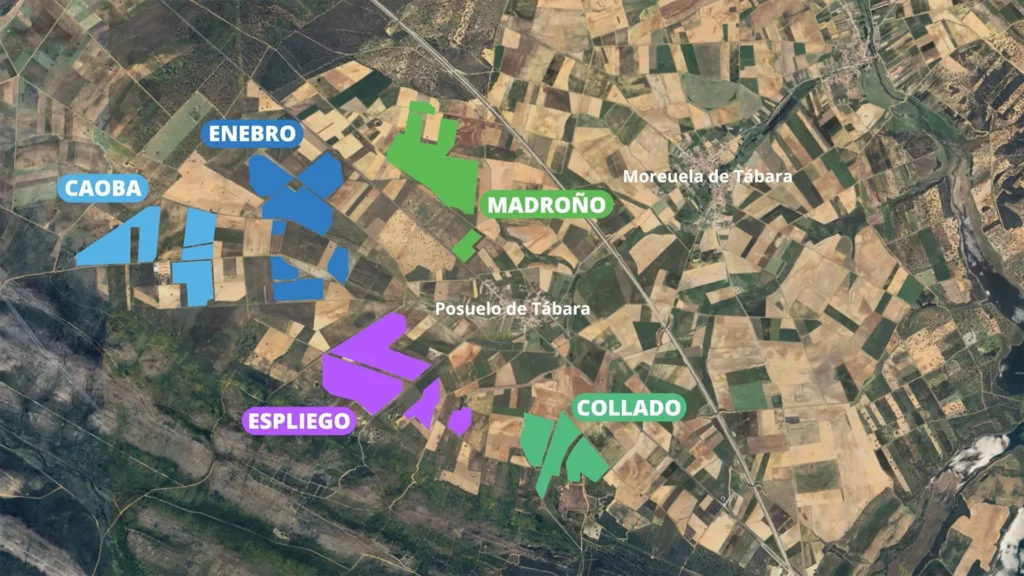
5 sites in the Zamora region constitute a large-scale territorial demonstration of the convergence between renewable energy production and ecological regeneration. Totalling 403 hectares, it is Amarenco’s largest project, combining ground-mounted solar power plants with a combined capacity of 225 MW and a structured programme for soil and biodiversity restoration.
The project’s ambition is founded on measurable objectives that are monitored over time. Across the 313 hectares occupied by the solar panels, the entire 403 hectares are engaged in an active regeneration process, with a clear trajectory: to move from 80% degraded soils to 100% of soils under regeneration in just 4 years. This transformation relies on more than 20 concrete regeneration actions (soil decompaction, biochar, water management), framed by scientific monitoring based on 6 key indicators of soil health, biodiversity and social impact.
Carbon impact is also central, with more than 1,200 tonnes of carbon sequestered, reinforcing the site’s role as a carbon sink alongside its low-carbon energy production.
Ecologically, the project aims for a massive restoration of habitats: more than 6,700 trees and plants will be planted, including nearly 2,000 native oaks, to create ecological corridors. This momentum is supported by the creation of 173 structures dedicated to wildlife, favouring the return of birds, amphibians and pollinators, and turning the site into a true biodiversity reservoir.
Finally, the project includes a concrete operational and social dimension, with practices such as rotational grazing engaging local stakeholders, contributing to the management of several hundred hectares while reducing fire risks and naturally fertilising the soil.