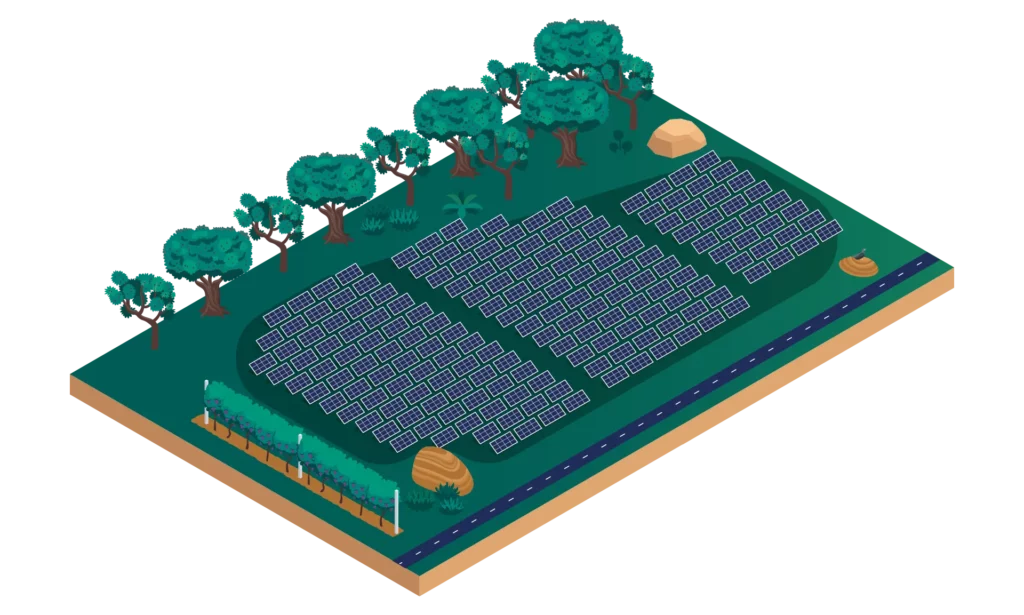
Country: France – Sallèles d’Aude (11) Project name: GM Invest
Asset Type: Ground mounted Power: 17.8 GWh/year Total area: 13.9 Ha 8,000 households powered Power purchase type of contracts: Call for tenders COD date: 2026
ECHO PROGRAM
ECHO Program Launch date: 2026 Local Expert Ecologist
ECHO PROGRAM PLANNED AROUND ITS OWN ENVIRONMENT
Work on soil health, carbon content and biodiversity, including soil analysis and the implementation of activities to improve soil structure and increase carbon and water storage through plant rooting.
Contribute to the preservation of local ecological heritage through the planting of local species, the creation of habitats that provide ecosystem services (pollination, erosion control) and informing local communities.
Key performance indicators and specific characteristics
of the baseline environment
Impact of the regeneration program on the local community.
* Our Echo program is built on the continuous improvement of soil health through key indicators. The initial assessment (T0) often reveals degradation, which fully justifies our solutions.
RESILIENCE SCORE
Average Genesis 5 metrics
Our exclusive partner in charge of analysing the health of our soils before and for the duration of all our regeneration programmes.
T0 DEGRADED
3.4
CARBON STOCK
DEGRADED
2.4
SOIL BIODIVERSITY
DEGRADED
3.5
WATER RETENTION
AVERAGE
4.8
GOALS
Make 2.2 hectares accessible to the public, including an agroforestry forest that creates a symbiosis between planted olive trees and intermediate grass strips. Regenerate 11.6 hectares of soil beneath the panels using phyto-management, then transition to endemic prairie. Create an education and training zone along a pathway, raising awareness about agroforestry, ecosystem resilience, species interactions, and the actions implemented. Monitor the ecosystem throughout the project’s lifespan with regular interventions by ecologists.